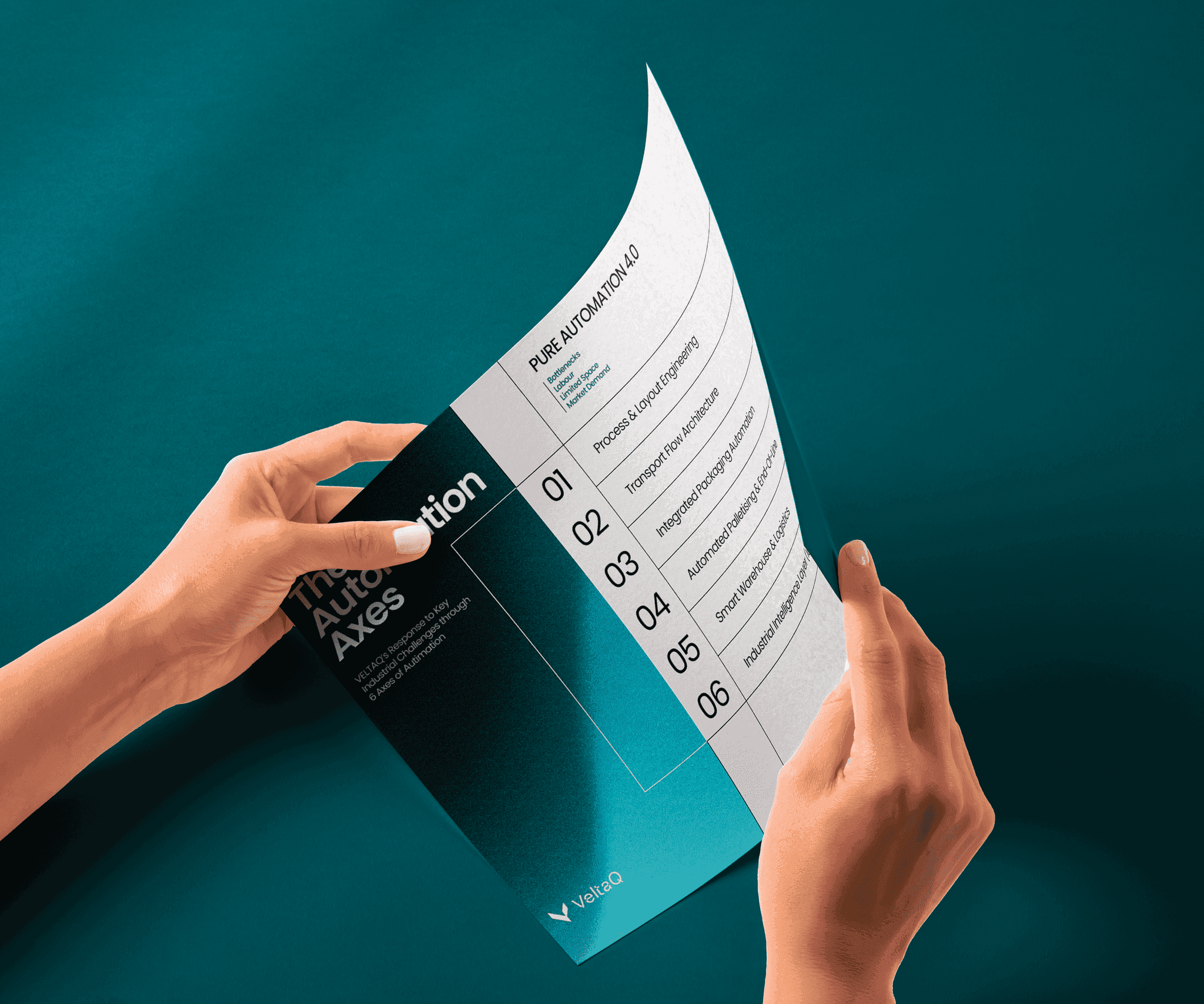
Building confidence in food automation
Food production depends on many moving parts working together. Machinery, labor, layouts, throughput, hygiene requirements, and maintenance all shape how efficiently a factory can operate.
VELTAQ develops modular automation systems for that environment, helping food manufacturers connect individual processes into more coordinated production lines.
The engineering was already complex. The communication around it needed to make that complexity easier to understand.
Seeing the whole line
Much of VELTAQ's work sits between individual machines and complete production systems.
A conveyor, processing unit, or handling module can be evaluated on its own, but clients are usually thinking about something larger: how everything fits into their facility, how production moves from one stage to another, and whether the system can grow with them.
That became the basis for how I approached VELTAQ's proposals and presentations.
Rather than treating each machine as an isolated product, the materials started showing the relationships between them: the flow of production, the role of each component, and the logic behind the proposed layout.
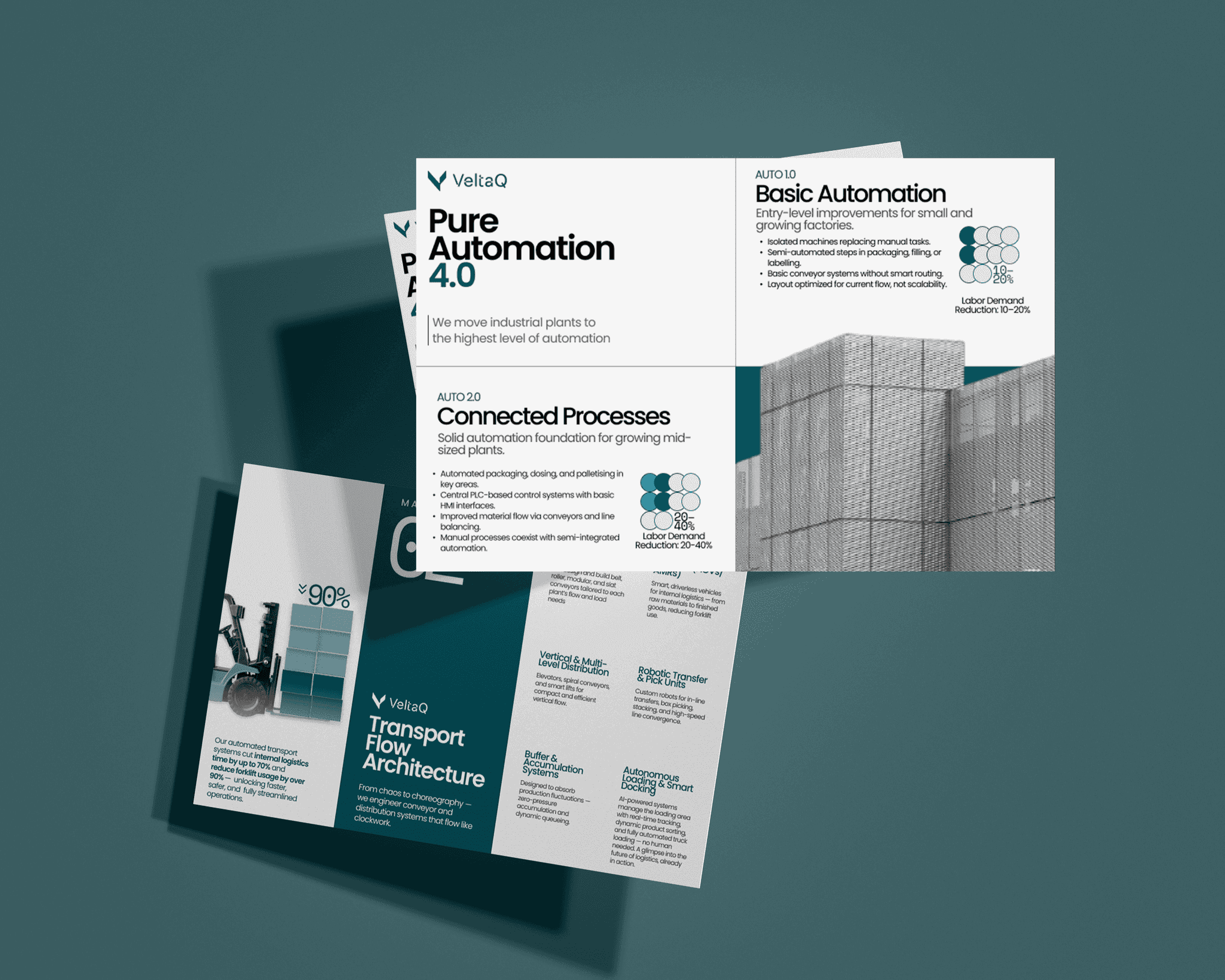
Giving technical information a hierarchy
VELTAQ's proposals often carry a large amount of information.
Layouts, technical specifications, production capacities, equipment details, pricing, and engineering considerations all have to coexist in the same document.
My work focused on giving that information a clearer hierarchy.
Technical drawings remained technical. Data remained precise. But the structure around them became easier to scan, compare, and discuss.
A proposal could begin with the production context, move into the recommended system, and then gradually introduce the details behind it.
For larger projects, that mattered. Some of the proposals I worked on exceeded €200K, where the document itself became an important part of how the project was understood internally by both VELTAQ and the client.
Designing for the conversation
The same thinking extended beyond proposals.
Presentations, diagrams, sales materials, and data visualizations were developed to support the conversations happening around the engineering.
Some information needed depth. Some needed comparison. Some only needed to answer one question quickly.
Using clearer visualization and structured sales data helped reduce the time needed to interpret key information by around 30%, particularly when different options or performance figures had to be compared.
That made the materials useful beyond presentation. They became part of how decisions were discussed.
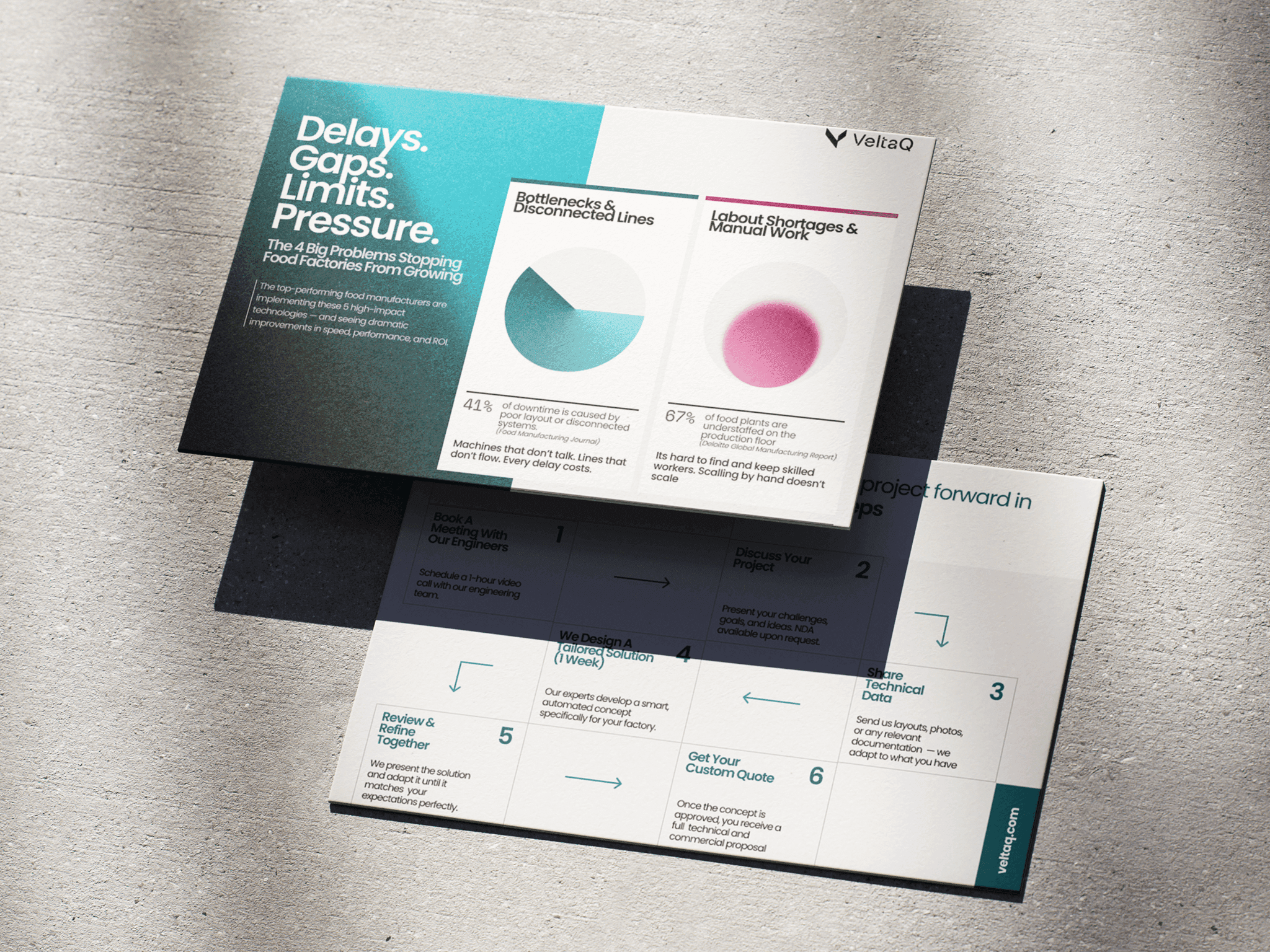
From machinery to production systems
Across the work, VELTAQ's communication gradually became less centered on individual equipment and more on what the equipment could achieve together.
That reflected the way the company was already working.
Their value wasn't simply in supplying machinery, but in understanding how a production environment could be arranged, connected, and adapted around the needs of the manufacturer.
The visual system helped make that broader proposition easier to see.
From technical proposals to client presentations, the aim remained consistent: keep the engineering precise, while making the system around it easier to understand and easier to trust.
07
©